Frequently Asked Questions
Powering tomorrow starts today
The Chugwater Energy Project supports America’s economic growth, strengthens communities and contributes to our nation’s energy independence.
Discover how Chugwater Energy Project is creating local opportunities, delivering energy and shaping a brighter future. Explore the project’s benefits for you and your community—and get answers to your wind, solar and battery energy storage questions.
Wind Energy & Safety
Why do some wind turbines spin, while others next to them do not?
How reliable is wind energy?
What happens when the wind doesn’t blow?
Are there wind seasons?
Do wind turbines operate in extreme temperatures/weather conditions?
How often do turbines require maintenance?
What does the computer system inside a wind turbine do?
Is wind energy cost effective?
Is a power purchase agreement required before construction begins?
What effect do wind turbines have on the transmission grid?
Safety
Are wind turbines safe?
Wind turbines are a safe and effective means of generating electricity. The first wind turbines came online in the U.S. in the 1980s. People have been safely living and working around wind turbines for generations. In addition, wind turbines have several built-in safety features, and we also have a state-of-the-art diagnostic center located at our corporate headquarters that monitors turbine operations 24/7 and can identify and address issues before they become operational problems.
What effect can lightning have on turbine operations?
Modern turbines are equipped with an extensive lightning protection system that grounds (makes harmless) the equipment without affecting turbine operations.
Are wind turbines noisy?
When ground-level winds are high, the sound of the wind masks most of the turbine sound. The sound from the rotating blades may be audible depending on many variables, such as your distance from the turbine, weather conditions and time of day.
What impact will a wind farm have on my property values?
Multiple studies have found wind farms have no significant long-term impacts on property values.
Do wind turbines negatively impact our health?
No. When properly sited, wind turbines are a safe and effective means of generating electricity.
What happens at the end of a wind farm’s useful life?
Decommissioning is the process of removing all wind turbines and returning the land to its original condition.
Do wind turbines impact birds, bats and wildlife?
Wind energy is far less harmful to wildlife than the traditional energy sources it displaces.
Economics
What is the impact of new wind plants on my electricity bill?
Our company is a wholesale provider of electricity. While we provide the electricity itself, your power bill — which you get from your local electric provider — contains a number of different items and costs, along with the electricity.
That said, renewable energy is among the most cost-effective forms of energy generation available today, and adding more affordable, renewable energy to the regional grid reduces the need to build more expensive fossil-fuel-generated electricity.
How does wind energy work with farming and ranching?
Wind energy can complement farming and ranching operations, adding a new source of reliable income for their families. Learn more.
Community
What involvement should communities have in a wind energy project?
Building a strong partnership with the community is critical to the success of every one of our projects. With community dialogue a vital component of our strategy, we started speaking with residents early in the project development process to introduce the project and solicit early feedback on our proposal. Our goals are to:
- Establish a cooperative relationship with your community;
- Listen to you and your neighbors;
- Share information; and
- Ensure that our proposal fits the interests and priorities of the community.
We've also met with your elected and appointed officials, civic associations, environmental groups and other community organizations. We periodically share new information, as it becomes available, to provide project updates to the community.
Environment
Is an environmental review performed?
Yes. As part of our development process, we conduct thorough wildlife studies to ensure each site complies with all local, state and federal environmental regulations.
The ultimate objectives of choosing a site are to make certain there is minimal impact to the environment and community and – only when this is ensured – identify areas with the best potential to generate energy from wind and access to available capacity on the electric grid.
Will a wind project cause any pollution?
No. Wind turbines do not produce any greenhouse gas emissions, water emissions or solid waste byproducts.
Landowners
What do you look for in a site when building a renewable energy project?
We generally look for a location with good wind, landowners who are interested in hosting our equipment and proximity to transmission lines.
If I have land and want you to assess its suitability for a renewable energy project, how can I get you to look at it?
We cannot guarantee that we will assess every parcel of land presented to us. However, the first step is to contact us.
How much land does a typical wind project require?
Each wind turbine uses less than one acre of land, allowing landowners to continue farming and ranching around them.
NextEra Energy Resources works with landowners when siting wind turbines and access roads to minimize impact to crops, grazing and other farming and ranching operations.
Is there construction traffic?
Yes. During construction there will be additional traffic in the area. Although the construction period is only a matter of months, it will require heavy equipment, including bulldozers, graders, trenching machines, concrete trucks, flatbed trucks and large cranes.
Once the wind farm is operational, there is no need for additional construction traffic.
How long will it take to complete construction?
The timeline really depends on the size of the project. However, six to nine months is a typical timeframe to build most wind projects.
How much income is generated for a landowner?
A landowner can potentially earn more per acre for hosting a wind turbine than any crop or ranching activity. Income from a wind farm helps diversify a landowner’s operations.
The regular payments landowners earn create guaranteed, long-term income that is not impacted by commodity prices or weather. Land agreement terms can vary widely, based on a number of factors. The prices are negotiated between the wind project and the landowner, so we do not disclose them to the public.
What does a land agreement cover?
Commercial terms and land rights agreements with landowners can vary widely from one project to another. The variations are based on several factors, such as available wind resources and the number of turbines on the property.
Land contracts also generally cover additional items including locations and types of access roads, project decommissioning terms and the landowner and wind project manager’s responsibilities.
If I allow you to build turbines on my property, am I liable for accidents or injuries on my land?
No. Landowners are not liable for actions occurring on their property as a result of the equipment. Our contracts with landowners hold them harmless from liability resulting from hosting wind turbines and associated equipment on their property.
Do construction plans account for harvest/planting seasons?
No. However, if you are a farmer, you are compensated for loss of crops during construction. Determining when construction begins will depend more on when the easements and permitting are complete, as well as having the wind farm operational before peak wind seasons arrive, which will vary by region.
Can I enter into a land rights agreement for other things if I have a land rights agreement with you?
Our option and our easement are only for the wind turbines. Landowners can enter into other agreements that do not interfere with the wind turbine equipment or operation.
Can I still have hunting leases after I sign?
Landowners hosting wind turbines can still have hunting leases. A number of our wind projects are on hunting camp property.
Who pays the taxes if I have wind energy equipment on my land?
The wind project pays the taxes on our generation equipment and infrastructure.
If I am a current landowner and have questions, who can I contact?
Solar FAQs
What is solar energy used for?
Once converted into electricity, solar energy is used in homes and businesses just like any other form of electricity.
What are some advantages of solar energy?
After the initial investment in solar-energy equipment, the costs are minimal since the sun provides free "fuel." These facilities are not affected by the supply and demand of fuel or subject to price volatility, and solar energy can help reduce America’s dependence on foreign sources of energy.
How does solar energy work?
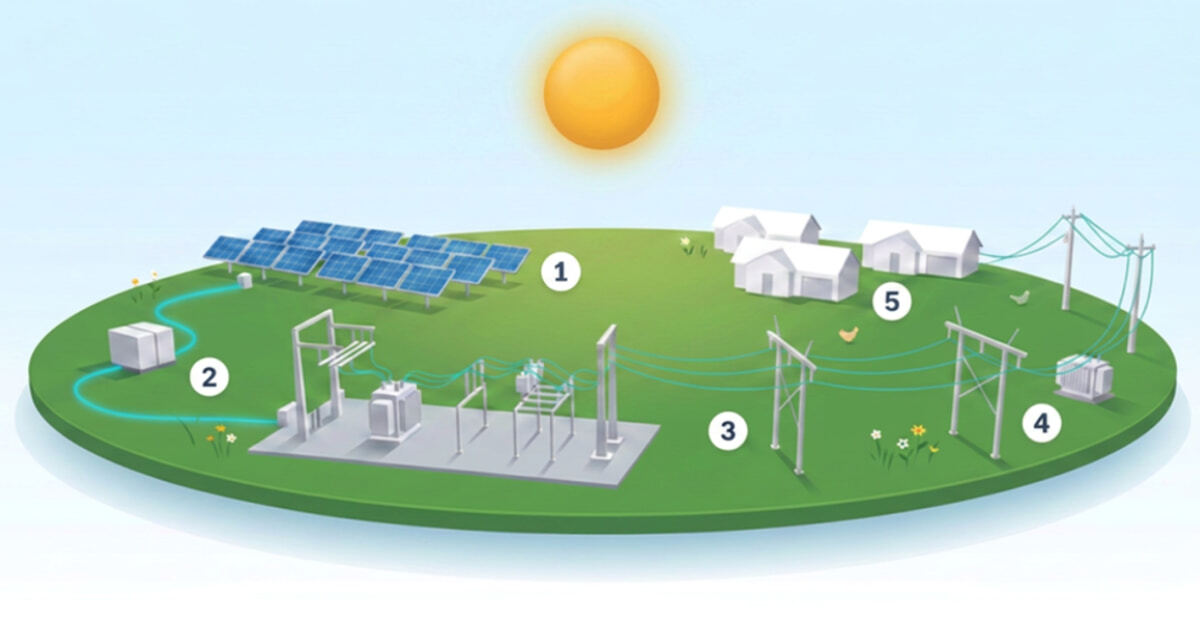
1. As light hits the solar panels, the solar energy is converted into direct current (DC) electricity.
2. The direct current flows from the panels into power inverters and is converted into alternating current (AC) electricity, which is suitable for use by homes and businesses.
3. The AC electricity from the power inverters is collected using cables and delivered to a central electrical substation, where it passes through a power transformer.
4. The electricity travels through transformers, and the voltage is boosted for delivery onto the transmission lines.
5. American-made solar electricity is delivered to homes and businesses.
How many solar facilities does your company have and where are they located?
We currently have ownership interests in approximately 8,000 MW of operating solar projects (as of 2024), representing universal-scale solar facilities in 31 states.
Are solar facilities good for the environment?
Solar energy emits no pollutants and the overall impact of solar on human health is overwhelmingly positive.
What percentage of generation does solar energy represent in the NextEra Energy Resources' portfolio?
Solar energy represents about 21% of NextEra Energy Resources' generation.
What do you look for in a site when building an energy project?
We look for a location with good wind or solar resources, landowners who are interested in hosting our equipment and proximity to transmission lines.
If I have land and want you to assess its suitability for an energy project, how do I get you to come out to look at it?
We cannot guarantee that we will assess every parcel of land presented to us. However, you can contact us for more information.
How much land does a solar project require?
Typically, a project will require 5 to 8 acres of land for each megawatt of solar energy capacity.
Is there construction traffic?
Yes. During construction there will be additional traffic. Although the construction period is only a matter of months, it will require heavy equipment, including bulldozers, graders, trenching machines, concrete trucks, flatbed trucks and large cranes.
How long will it take to complete construction?
It depends on the size of the project. However, 12 to 18 months is a reasonable time frame to build most solar projects.

Battery Energy Storage FAQs
What are the components that make up a battery energy storage system?
A storage system consists of:
- Individual battery cells.
- These cells are collected into modules and housed in a specially designed, climate-controlled storage container.
- The racks fill containers, not unlike a storage container you’d see on a ship or truck.
- The containers are paired with inverters to convert DC to AC electricity.
- Can be paired with a renewable energy asset (solar, wind) or stand alone.
What is the value of energy storage for both a utility and its customers?
Battery energy storage helps optimize the way the power grid delivers electricity to customers including:
- Reduces fluctuations in voltage
- Reduces energy losses and waste
- Avoids the need for some system upgrades, including big transmission projects
- Extends the hours a renewable energy project can operate, i.e., even after the sun goes down or the wind stops blowing
- Allows customers to enjoy more renewable energy, more hours of the day
Energy storage delivers several advantages to the power grid and our customers. What makes energy storage attractive is that it can store electricity and deliver it later at a more appropriate time, in the required amount, to either grid operators or direct consumers.
Do battery energy storage systems present a fire risk?
Fires involving battery energy storage systems are rare. At NextEra Energy Resources, the safety of our employees, neighbors and the public are always our highest priority. Responsible energy production begins with preparation from day one.
- Batteries used in our facilities undergo rigorous industry testing and certification by Underwriters Laboratories (UL). This ensures that the cell and module designs are robust.
- Battery modules are housed in fully enclosed containers, like shipping containers.
- Each container is equipped with fire protection and explosion control systems to comply with the National Fire Protection Association.
- We have sensors that alarm when an abnormal condition arises. Additionally, our facilities are monitored 24/7 by our Renewable Operations Control Center, which can remotely shut down any affected site.
- We work and train with local first responders and fire officials to coordinate any response, in the unlikely event of a fire.
Has your company built other energy storage systems?
NextEra Energy Resources affiliates have more than 2.6 GW of operational energy storage, including:
WEST
- Arlington Energy Center III, California
- Arlington Solar, California
- Blythe 110 Energy Storage, California
- Blythe II Energy Storage, California
- Blythe III Energy Storage, California
- Blythe IV Storage, California
- Buena Vista Energy Center, New Mexico
- Casa Mesa Energy Storage, New Mexico
- Desert Peak, California
- Desert Sunlight Energy Storage, California
- Dodge Flat Solar, Nevada
- Fish Springs Ranch Solar, Nevada
- Jackson Fuller Energy Storage, Colorado
- McCoy Energy Storage, California
- Neptune Energy Center, Colorado
- North Central Valley Storage, California
- Paulsell Energy Storage, California
- Pima Battery Energy Storage System, Arizona
- Pinal Central Energy Storage, Arizona
- Proxima Energy Storage, California
- Resurgence Solar I and II, California
- Saint Energy Storage II, Arizona
- Silver State South Energy Storage, Nevada
- Sky Ranch Energy Storage, New Mexico
- Sonoran Energy Storage, Arizona
- Storey Energy Storage, Arizona
- Sunlight Storage II, California
- Thunder Wolf Energy Center, Colorado
- Troutdale Energy Storage, Oregon
- Wheatridge Solar, Oregon
- Wilmot Energy Storage, Arizona
- Yellow Pine Energy Center I, Nevada
- Blue Summit Energy Storage, Texas
- Cool Springs Solar, Georgia
- Inertia Energy Storage, Texas
- Shamrock Energy Storage, Texas
- Searcy Solar, Arkansas
- Casco Bay Battery Energy Storage System, Maine
- East Hampton Energy Storage, New York
- Elmira Energy Storage, Ontario
- Green Mountain Battery Energy Storage, Pennsylvania
- Mantua Creek Energy Storage, New Jersey
- Minuteman Storage, Massachusetts
- Montauk Energy Center, New York
- Parry Energy Storage, Parry Sound, Ontario
- Breckinridge Energy Storage, Oklahoma
- Gopher Energy Storage, Anoka and Isanti counties, Minnesota
- Minco II Energy Storage, Oklahoma
- Rush Springs Energy Storage, Oklahoma
- Lee Dekalb Storage, Illinois
- Woodward Energy Storage, Oklahoma
Additionally, over one-third of the new solar projects we’re developing for customers now includes a storage component.
What type of batteries will the storage system employ?
We primarily use lithium-ion battery technology, which has benefited from years of research and development and has been proven to be safe, efficient and cost-effective for utility scale battery energy storage. We are always evaluating other battery chemistries and technologies to continue to advance this growing industry.
